
Published Papers
"Optimal Macroeconomic Policies in a Heterogeneous World"
with James Bullard,
Aarti Singh.
IMF Economic Review , September 2024: 1-51.
Abstract:
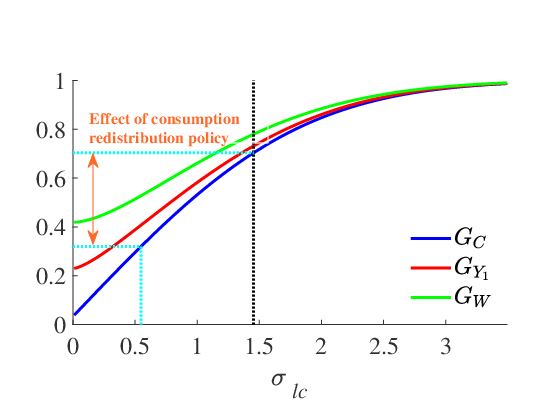
We study a DSGE model with “massive” heterogeneity,
enough to approach Gini coefficients for income, wealth, and consumption
in the U.S. data. The economy features three aggregate shocks as well as
both permanent and temporary idiosyncratic risk. We introduce policymakers
that can mitigate these risks for households, and a welfare theorem outlines
how the proposed policies imply an optimal allocation of resources.
The proposed policies include achieving the Wicksellian natural real rate of
interest, social insurance, and a set of taxes and transfers designed to reduce
consumption inequality. We calibrate the model to U.S. data from 1995 to 2023
assuming the optimal set of policies and argue that the model fit is promising.
This suggests that, broadly speaking, U.S. macroeconomic policy has in recent
decades been close to optimal. Improvements beyond this set of policies requires
design of responses to very large shocks, and we suggest some directions in which
such a design may proceed.
"The impact of monetary policy on employment in Poland
through the lens of disaggregated data "
with Marta Kightley.
BIS Papers No 142, November 2023: 251--263.
Abstract:
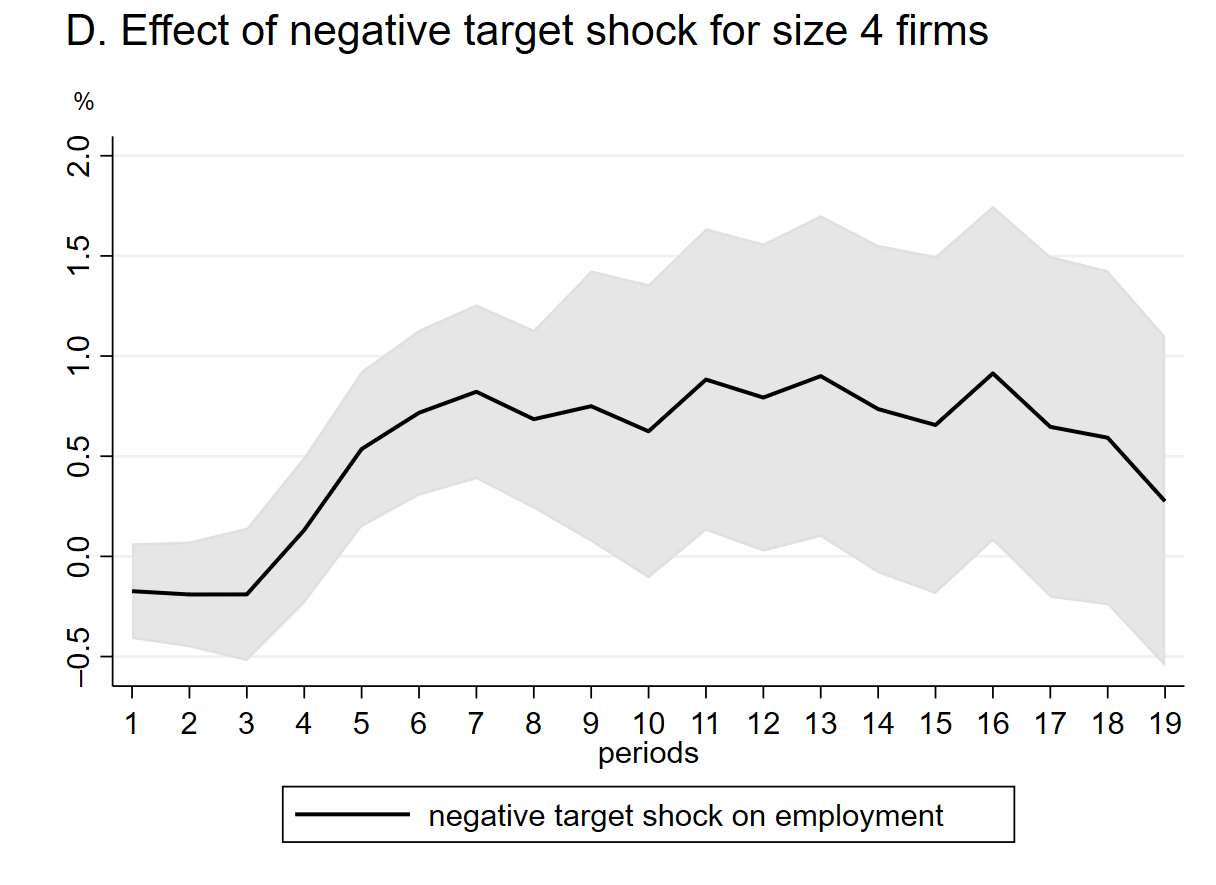
We study the effects of monetary policy shocks on the labor market across firms
in different sectors. Using the local projections method we find that the response of
employment and hiring growth to monetary policy shocks is stronger for firms in the
manufacturing and construction sectors relative to those in the service sector. Those
sectoral differences are also present within firms of the same size. Moreover, we find
that within a sector, employment and hiring growth in large firms respond more to
contractionary monetary policy shocks compared to small firms; the response to expansionary
monetary policy shocks is less compared to small firms. Finally, we find
that the differences in the employment and hiring growth between small and large firms
are greater for firms in the manufacturing and construction sectors, compared to those
between small and large firms in the service sector.
"Monetary policy, labor market, and sectoral heterogeneity"
with Aarti Singh,
Anastasia Zervou.
AEA Papers &Proceedings 112, May 2022: 491-495.
Abstract:
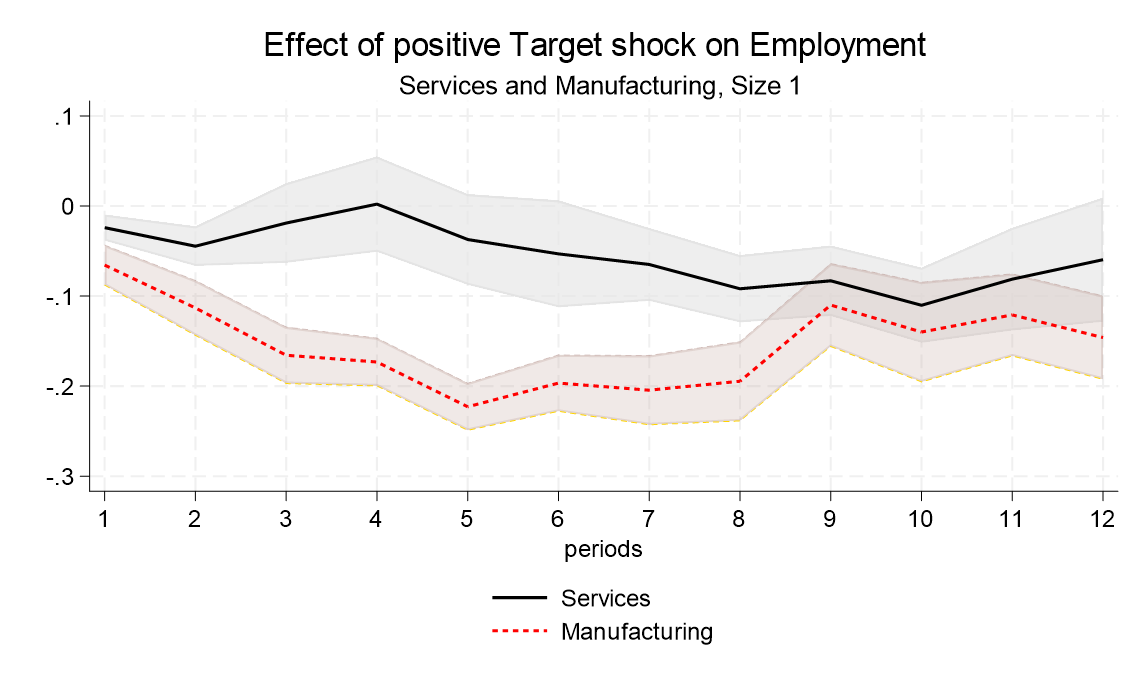
We study the effects of monetary policy shocks on the labor market across firms
in different sectors. Using the local projections method we find that the response of
employment and hiring growth to monetary policy shocks is stronger for firms in the
manufacturing and construction sectors relative to those in the service sector. Those
sectoral differences are also present within firms of the same size. Moreover, we find
that within a sector, employment and hiring growth in large firms respond more to
contractionary monetary policy shocks compared to small firms; the response to expansionary
monetary policy shocks is less compared to small firms. Finally, we find
that the differences in the employment and hiring growth between small and large firms
are greater for firms in the manufacturing and construction sectors, compared to those
between small and large firms in the service sector.
"Are DSGE Models Irreparably Flawed?"
with Michał Brzoza-Brzezina.
Bank i Kredyt / Bank & Credit 52(3), June 2021: 227--252.

Abstract:
In this paper we respond to the recent critique of Dynamic Stochastic General Equilibrium (DSGE)
models. We present the most recent developments in the DSGE literature and show that it has gone
a long way to accommodate many sources of criticism.
"Optimal Monetary Policy at the Zero Lower Bound"
with Costas Azariadis, James Bullard, Aarti Singh.
Journal of Economic Dynamics and Control 103, June 2019: 83-101
Abstract:
We study monetary policy when private credit markets are incom-
plete. The macroeconomy we study has a large private credit market,
in which participant households use non-state contingent nominal contracts (NSCNC). A second, small group of households only uses cash,
supplied by the monetary authority, and cannot participate in the
credit market. There is an aggregate shock. We find that, despite the
substantial heterogeneity, the monetary authority can provide for optimal risk-sharing in the private credit market and thus overcome the
NSCNC friction via a counter-cyclical price level rule. The counter-cyclical
price level rule is not unique. To pin down a unique monetary
policy rule, we consider two secondary goals for the monetary authority,
(i) expected inflation targeting and, (ii) nominal GDP targeting.
We examine the impact of each of these approaches on the price level
rule and other nominal variables in the economy.
St. Louis Fed Working Paper 2015-010. Close
"Learning Leverage Shocks and the Great Recession"
with Patrick Pintus.
Review of Economic Dynamics 31, January 2019: 123-146

Abstract:
This paper develops a simple business-cycle model in which financial shocks have large
macroeconomic effects when private agents are gradually learning the uncertain environment.
Agents update their beliefs about the reduced-form structure of the economy. Because the
persistence of leverage is overestimated by adaptive learners, the responses of output, investment,
and other aggregates under adaptive learning are significantly larger than under rational
expectations. In our benchmark case calibrated using US data on leverage, debt-to-GDP and
land value-to-GDP ratios for 1996Q1-2008Q4, learning amplifies leverage shocks by a factor
of about three, relative to rational expectations. When fed with actual leverage innovations
observed over that period, the learning model predicts that the persistence of leverage shocks is
increasingly overestimated after 2002 and that a sizeable recession occurs in 2008-10, while its
rational expectations counterpart predicts a counter-factual expansion. In addition, we show
that procyclical leverage reinforces the amplification due to learning and, accordingly, that
macro-prudential policies that enforce countercyclical leverage dampen the effects of leverage
shocks.
GRAPE Working Paper 28 Close
"Belief-Twisting Shocks and the Macroeconomy"
Macroeconomic Dynamics 22(7), October 2018: 1844-1858.
Abstract:
I study the role of shocks to beliefs combined with Bayesian learning in a
standard equilibrium business cycle framework. In particular, I examine how a
prior belief arising from the Great Depression may have influenced the macroeconomy during the last 75 years. In the model, households hold twisted beliefs
concerning the likelihood and persistence of recession and boom states that are
affected by the Great Depression. These initial beliefs are substantially different
from the true data generating process and are only gradually unwound during
subsequent years. Even though the driving stochastic process for technology is
unchanged over the entire period, the nature of macroeconomic performance is
altered considerably for many decades before eventually converging to the
rational expectations equilibrium. This provides some evidence of the lingering
effects of beliefs-twisting events on the behavior of macroeconomic variables.
Keywords: Bayesian learning, business cycles, non-linear dynamics
BdF Working Paper 434 Close
"International Great Inflation and Common Monetary Policy" with Anastasia Zervou.
Macroeconomic Dynamics 22(6), September 2018: 1428-1461.

Abstract:
We study whether monetary authorities in the G7 countries were changing their
responses to inflation in a similar manner during and following the Great Inflation
era. We find that the common to the G7 countries inflation pattern during the Great
Inflation period could be associated with a common pattern in the monetary policy
response to inflation: we find that until the early 1980s monetary authorities in the
G7 countries responded mildly to inflation, systematically fought it throughout the
1980s and lessened again their response during the 2000s. The estimated Taylor rule
coefficients on inflation are cointegrated, implying the existence of a long run relationship
in the responses to inflation during and after the Great Inflation period. At the
same time, principal component analysis of the residuals of the estimated Taylor rules
indicates that the shocks' structure cannot account enough for the monetary policies'
comovements. We interpret these findings as suggestive of common monetary policy
patterns.
"The Stability of Macroeconomic Systems with Bayesian Learners" with James Bullard
Journal of Economic Dynamics and Control 62, January 2016: 1-16.

Abstract:
We study abstract macroeconomic systems in which expectations
play an important role. Consistent with the recent literature on recursive learning and expectations, we replace the agents in the economy with econometricians. Unlike the recursive learning literature,
however, the econometricians in the analysis here are Bayesian learners. We are interested in the extent to which expectational stability
remains the key concept in the Bayesian environment. We isolate
conditions under which versions of expectational stability conditions
govern the stability of these systems just as in the standard case of
recursive learning. We conclude that Bayesian learning schemes, while
they are more sophisticated, do not alter the essential expectational
stability findings in the literature.
"Monetary Policy and the Financial Sector" with Aarti Singh, Sophie Stone.
Economics Letters 132, July 2015: 82-86.
Abstract:
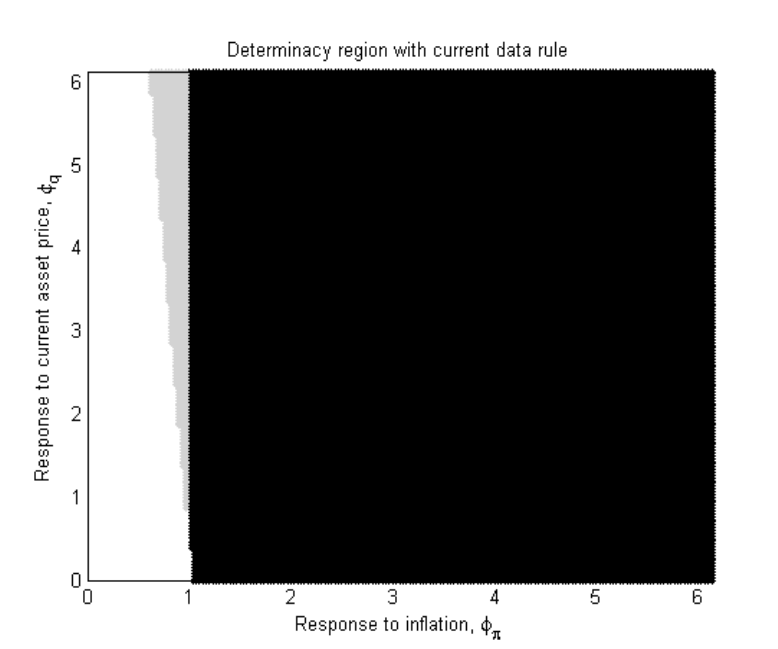
In this paper we study whether central banks should react to financial
sector variables in their policy rules. We find that responding
to asset prices does not affect the determinacy conditions. However,
responding to entrepreneurial net worth increases the likelihood of
determinacy.
Working Papers
"Heterogeneous labour market response to monetary policy: small versus large firms" (new version: October 2022)
with Aarti Singh, Anastasia Zervou.
NBP Working Paper 355/2022,
SSRN link, submitted
"The Dangers of Macro-prudential Policy Experiments: Initial Beliefs under Adaptive Learning"
with Patrick Pintus , Burak Turgut.
GRAPE Working Paper 49/2021, submitted
"Business Cycles and On the Job Search" with Marek Antosiewicz.
IBS Working Paper 7/2016.
Work in progress
"Estimating financial frictions under learning" with Patrick Pintus , Burak Turgut.
Discussions
"Estimating financial frictions under learning" with Patrick Pintus , Burak Turgut.